


Mitsotakis: Minimum monthly wage increasing to 920 euros from April 1
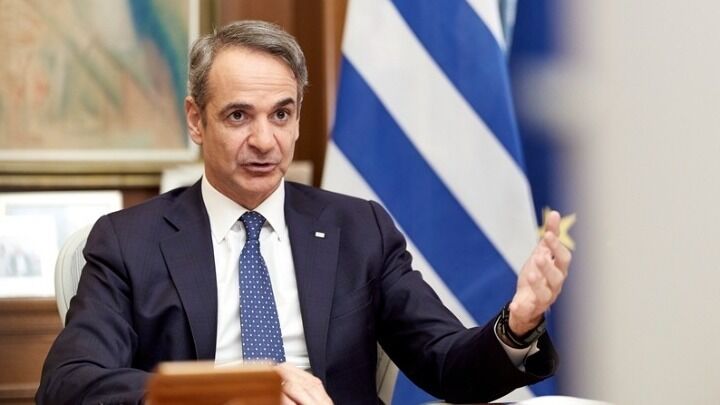
“Obviously, I would have wished my introductory statement at today’s meeting to be more optimistic. However, regrettably, the ongoing global conflict in the Middle East continues to create uncertainty in the international environment. Fluctuations in fuel prices are fuelling inflation, which in turn is triggering a chain of reactions with repercussions not only for Greece but for every economy and every society,” Prime Minister Kyriakos Mitsotakis said at a cabinet meeting on Thursday.
“I believe that uncertainty has now become the only certainty, and this clearly requires constant vigilance on our part. Following the initial measure we adopted – namely, the cap on profit margins in fuel pricing – as you are aware, four additional measures have been launched at the national level,” he said and added:
“Our objective is clear. On the one hand, we seek to contain increases in diesel prices, as these significantly impact transport costs and business production expenses. On the other, we are providing targeted support – through a two-month fuel card – to the majority of Greek households in order to mitigate the impact of rising petrol prices. We are also mindful of our farmers, introducing a subsidy on fertilizers, effective from March 15. Furthermore, we are implementing an important intervention in ferry ticket pricing to ensure that fares, at least for the Easter period, remain broadly in line with last year’s levels. These constitute four lines of defense against this external crisis, aimed at preventing, to the extent possible, its spillover into widespread price increases ultimately borne by consumers,” the prime minister added.
Mitsotakis also announced a further increase in the minimum monthly wage, effective from April 1:
“We now turn to the Cabinet’s agenda, as today we will jointly decide on a new increase in the minimum wage as part of our support measures for society. I would like to recall that this marks the sixth consecutive increase since 2019, when the minimum wage stood at 650 euros. The proposal of the competent minister – who will elaborate on the issue – is to raise it to 920 euros. This represents a monthly increase of 40 euros compared to last year. In other words, the cumulative increase in the minimum wage since 2019 exceeds 41%, amounting to more than 3,780 euros annually,” he noted.
“Let us also recall that an increase in the minimum wage does not affect only these salaries; it has a broader upward effect on the seniority-based wage scale, public sector pay scales, and a range of social benefits,” he added.
Referring to unemployment, the prime minister stated:
“It is always worth recalling that our central commitment in 2019 was to reduce unemployment and create a substantial number of new jobs. Today, reviewing the past six years, 563,000 new jobs have been created in our country.
I repeat, 563,000 new jobs. We inherited unemployment at 18%. As of January, it stands at 7.7%. Alongside what I believe to be a highly successful policy, we are now also protecting workers through the digital labor card, which fully safeguards their rights.
We are extending its application to five additional sectors, ranging from private healthcare to telecommunications and cleaning services. Its coverage will now exceed 2.3 million employees. I believe this initiative has been validated by the data we are observing, including a significant increase in declared overtime and substantially improved protection for workers against any potential employer abuses.”
Finally, referring to developments in the conflict involving Iran, he underlined:
“In such a complex context, the national strength we project beyond our borders must be underpinned by internal stability and unity. It is essential that we retain the capacity to distinguish the major and consequential developments of a changing world – developments that directly affect us – from the minor and less significant issues of our domestic party politics.”






Σχόλια Facebook