


Greek citizenship through a grandparent and the steps Greek Americans can take now
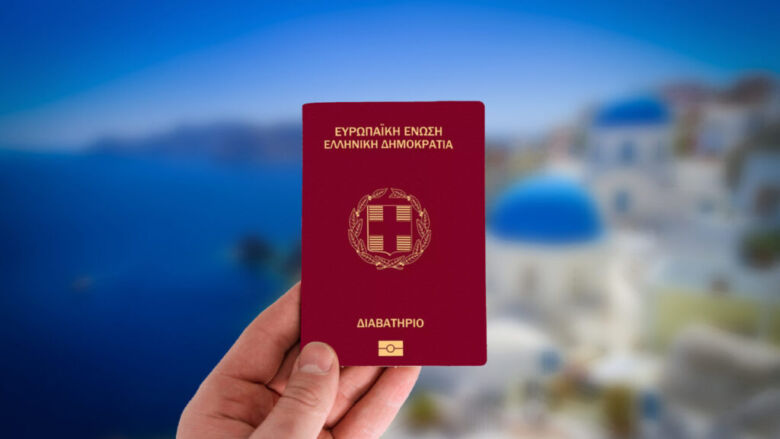
Your grandfather’s name may be in a Greek municipal register while yours appears nowhere in Greece’s records. For a Greek American seeking Greek citizenship through a grandparent, that gap is the heart of the matter. The question is not simply whether the family came from Greece. It is whether the legal connection can be documented through every generation between the ancestor and the applicant.
That question returned to the news on November 6, 2026, when Greek City Times reported that Prime Minister Kyriakos Mitsotakis wants an easier citizenship process for the diaspora’s third and fourth generations. The underlying remarks can be verified against an official source. The interview with Australia’s Neos Kosmos is posted on the prime minister’s website, dated October 16, 2026. The report is new, but the remarks were not made yesterday.
In the official interview, Mitsotakis says the process is “more complicated than it should be.” He describes second-generation cases as more straightforward and third- and fourth-generation cases as more complex. Easing those procedures, he says, would be “one way of making more people Greek.”
The interview does not announce new eligibility rules, a legislative measure or an implementation date. Greek City Times likewise distinguishes the government’s stated intention from a change in law. This is not a new automatic citizenship entitlement for everyone with a Greek grandparent. Anyone starting on November 7 must work through the existing legal routes and official requirements.
That does not mean a family must wait for reform before doing anything useful. Finding the ancestor’s Greek registration and identifying the missing links can begin now. The important first decision is which procedure applies, rather than which form happens to appear in an internet search.
Article 1 of the Greek Citizenship Code, Law 3284/2004, provides that the child of a Greek father or mother acquires Greek citizenship from birth.
The Interior Ministry’s published consolidation is updated through September 17, 2025. The ministry cautions that the relevant Government Gazette texts and any subsequent amendments must also be checked.
The basic rule refers to a parent. A claim through a grandfather or grandmother therefore requires an examination of the intervening generation. If your parent was already a Greek citizen and registered when you were born, the task may concern recording your birth and completing your municipal registration. If the parent’s status first needs to be established, producing a grandparent’s certificate does not simply eliminate that intermediate step.
Article 26 provides a citizenship determination procedure for specified cases involving descendants whose parent’s citizenship from birth was established later. The applicable law and the family’s circumstances must be examined. Recognition of Greek citizenship by descent is not one universal application with a guaranteed outcome for every grandchild. Nor is recognition of an existing status necessarily the same thing as naturalization.
Official guidance from Greece’s missions in the United States places municipal registration, the dimotologio, at the center of the documentary process. A Greek civil birth certificate alone does not establish that a person is registered as a Greek citizen. Being born in Greece is not, by itself, sufficient proof of citizenship.
Begin by identifying the ancestor’s municipality. Gather the full Greek name, parents’ names, birth date and birthplace, along with any old Greek passport or family-status certificate. Ask about the grandfather’s or grandmother’s municipal entry and any existing entry for the parent. That exercise reveals which generation is already on the Greek record and where the documentary gap begins.
When direct municipal evidence cannot be established, the Foreign Ministry says some grandparent or great-grandparent claims may be assessed using alternative records. These can include the Male Registry, or Mitroo Arrenon, civil records, old Greek passports and other official evidence. Such material is assessed individually. It is not a blanket substitute for proving the legal chain, and the Male Registry concerns male ancestors, not grandmothers.
The working file should connect the Greek ancestor to the parent and the parent to you. Assemble the birth and marriage records that establish those links, available Greek municipal certificates and your valid U.S. passport. Flag surname changes, different spellings and previous marriages before submitting the file. Ask the consulate what evidence will resolve each discrepancy rather than assuming that similar names will be accepted as identical.
For birth registration, the official U.S. consular instructions list an original long-form birth certificate, a recently issued municipal-registration or family-status certificate for the parents, their Greek passports if they have them, and the applicant’s valid U.S. passport. A church baptism certificate is optional if a christening took place. It is not a replacement for the civil birth record.
The same official guidance requires original birth, marriage and death certificates to be authenticated with an Apostille. An Apostille verifies the document’s signature or seal for international use. It does not prove Greek descent. Check the issuing state’s competent authority for its requirements, including any preliminary certification needed for the record you hold.
Where an official Greek translation is required, confirm the accepted translator and document list with the consulate before paying. The Foreign Ministry maintains an official register of certified translators, searchable through gov.gr. A family member’s translation or an ordinary commercial translation is not automatically an acceptable official translation. The precise requirements depend on the procedure and receiving authority, so order the correct records first and obtain the required authentication and translation in the sequence the consulate specifies.
The first contact for a citizenship assessment is the Greek consular authority responsible for your place of residence. The Consulate General in New York covers New York, New Jersey, Connecticut and Pennsylvania. Its address is 69 East 79th Street in Manhattan. The official citizenship and registry contact is registry.nyc@mfa.gr.
Explain the three-generation chain and identify who is already registered in Greece. Ask whether the file requires birth registration, a formal citizenship determination or another legal procedure, and in what order the records should be completed. Applicants elsewhere should use the Foreign Ministry’s official U.S. jurisdiction table rather than choose a mission solely because it is convenient to visit.
There is a second jurisdiction rule to keep in mind. A civil-status event is ordinarily recorded by the consulate responsible for the place where it occurred. If you live in New Jersey but were born in a different consular district, ask the mission serving your residence to explain the coordination needed. The citizenship assessment and the recording of a particular birth are related but not identical functions.
Adults must appear in person to declare their own birth under the published U.S. instructions. The consulate reviews the documents, provides guidance and transmits the file where required. It does not itself award citizenship. The competent authorities in Greece handle the determination or confirmation and the resulting municipal registration.
Birth registration and the Special Registry
Recording a birth, the lixiarhiki praxi gennisis, and entering a person in the dimotologio are connected but distinct steps. The U.S. consular guidance requires the parents’ marriage to be registered in Greece before proceeding with the birth-registration cases it describes. Birth outside marriage, recognition of paternity and other special circumstances require individual instructions rather than a mechanical application of the standard checklist.
Since January 1, 2022, Greece’s salaried consular authorities have recorded foreign civil-status events directly in the national Citizens’ Registry, according to the Foreign Ministry. References to the Special Registry in Athens, the Eidiko Lixiarcheio, should not be read as instructions for every family to send a separate file there. Ask whether your circumstances require action by that office or retrieval of an older registration.
A grandmother’s Greek citizenship is worth investigating just as a grandfather’s is, but dates matter. Article 14 provides a special declaration route for children born before May 8, 1984, to a Greek mother. The relevant circumstances of that generation can affect how a later descendant’s file should proceed.
Adoptions, paternity questions, possible loss of citizenship and the death of an intermediate relative also need case-specific assessment. None should be treated as either an automatic rejection or a guarantee of approval. Ask the consulate to identify the relevant provision and the evidence needed, preferably before purchasing a large collection of certificates.
If citizenship by descent cannot be established, Article 10 provides a separate naturalization procedure for people of Greek origin living abroad. The application goes through the consul responsible for the applicant’s residence to the Interior Ministry. It involves its own supporting documents and assessment of Greek origin. It is not simply another name for recording citizenship held from birth.
There is no promise here of a universal completion time or an all-inclusive price. Obtain the applicable current fees and a case-specific estimate from the consulate before ordering records and translations. This guide is general information, not individual legal advice. Its practical starting point is nevertheless clear. You do not need to wait for a new law to find your grandfather’s municipal entry. Begin with that record, establish the intervening generation and build the documented route to your own name.
By Evageline Plakas
SOURCE: https://www.hellenicdailynewsny.com
LINK: https://www.hellenicdailynewsny.com/en-us/diaspora/greek-citizenship-grandparent-greek-americans-2026







Σχόλια Facebook