


Kikilias: Shipping brings investment, jobs and opportunities for Greek families
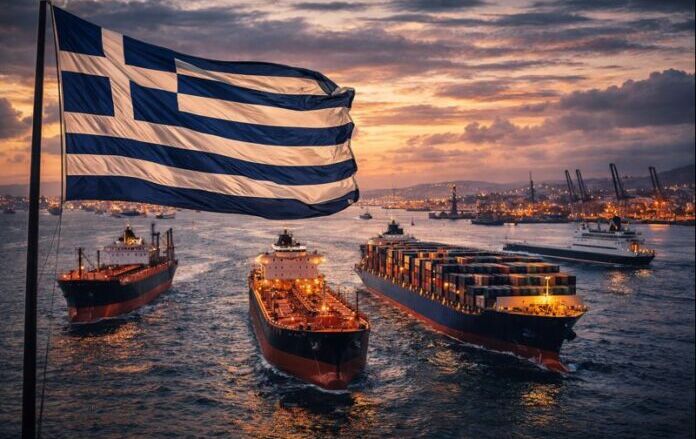
Maritime and Insular Policy Minister Vassilis Kikilias, in an interview with MEGA television, said that Greek shipping could become the country’s leading driver of economic growth, bringing more investment, well-paid jobs and higher incomes for Greek families.
Referring to international geopolitical developments, he said Greece possesses a unique strategic advantage through its shipping industry, which directly affects energy security, transport costs, inflation and ultimately the cost of living for citizens.
“Greece accounts for 60% of European shipping and 20% of global shipping through Greek-owned vessels. Furthermore, eighty per cent of global trade is conducted via maritime transport. Consequently, energy costs, the manner in which these costs affect households, the pricing of products, the presence of inflation, and the availability of goods are all intricately linked to ocean-going shipping,” he stated.
He added that, during negotiations at the International Maritime Organization (IMO) on the energy transition, Greece leveraged the strength of its Greek-owned fleet to promote a realistic approach that would not place additional burdens on economies and societies.
On ferry services, Kikilias said passenger safety and keeping ticket prices under control remain top priorities, noting that the government has already introduced significant measures to support both the sector and society.
Addressing irregular migration, Kikilias praised the work of the Hellenic Coast Guard and presented the latest figures on migration flows, as well as initiatives undertaken in cooperation with Frontex and the Libyan authorities. “It is a modern form of human trafficking. It is among the most disgraceful and immoral activities imaginable. The men and women of the Coast Guard fight these battles every day in the Aegean, day and night. Overall, compared with last year, we have seen a 23% reduction in migration flows. Arrivals from Turkiye are down by 62%, while those from Libya have increased by 68%,” he stressed.
He also said that Greece had agreed with Frontex that its aircraft and drones would no longer operate over Crete and the open sea, but would instead operate within 12 nautical miles of the Libyan coast. He added that a permanent Coast Guard representative was being sent to Tripoli and that three vessels had been completed and delivered to the Libyan authorities to assist them in tackling irregular migration.
amna.gr







Σχόλια Facebook