


The geopolitics of an Orthodox anniversary: Moscow, ecclesiastical legitimacy and the politics of presence
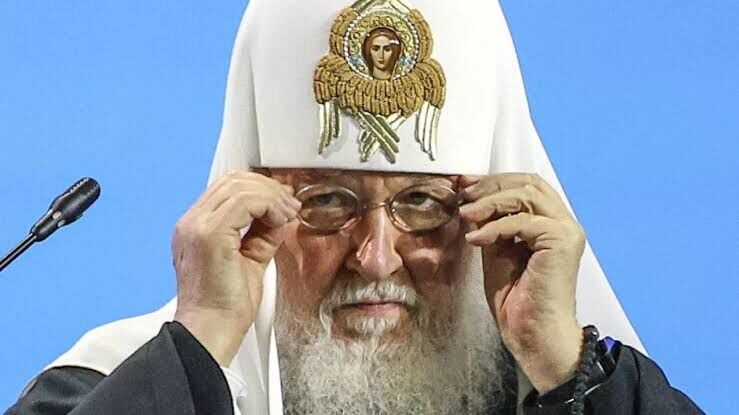
On November 20, Patriarch Kirill of Moscow will turn 80. In different circumstances, the anniversary would have been primarily an occasion for ecclesiastical ceremony, diplomatic courtesies, and the familiar exchange of greetings among Orthodox primates.
By George Nokos
On November 20, Patriarch Kirill of Moscow will turn 80. In different circumstances, the anniversary would have been primarily an occasion for ecclesiastical ceremony, diplomatic courtesies, and the familiar exchange of greetings among Orthodox primates. Yet the Russian Orthodox Church enters this celebration under conditions that would have been difficult to imagine a decade ago. The war in Ukraine has brought the relationship between the Moscow Patriarchate and the Russian state under intense international scrutiny, while the rupture in Eucharistic communion with Constantinople has exposed divisions that extend to the very foundations of contemporary Orthodox ecclesiology.
In this environment, the anniversary carries a significance that goes well beyond the personal milestone of the Patriarch. The international ecclesiastical presence in Moscow will provide an opportunity to assess how religious relationships are maintained, interpreted, and politically employed at a time when the Russian state faces sustained confrontation with the West.
There is a temptation to understand the event through the conventional diplomatic vocabulary of allies and opponents. Such an approach would, however, conceal the more interesting dimension of the occasion. Orthodox Churches do not operate as states, and their relationships cannot be reduced to the geopolitical preferences of their respective governments. They possess their own historical experiences, canonical obligations, and institutional interests. Nevertheless, they exist within political environments that increasingly shape the exercise of ecclesiastical diplomacy.
This tension is precisely what makes the forthcoming celebration worth examining.
The political uses of ecclesiastical recognition
The Moscow Patriarchate has long occupied a distinctive position in the international Orthodox world. Its demographic weight, extensive institutional resources, and historical association with Russian statehood have allowed it to maintain an international presence considerably greater than that of many other autocephalous churches.
During the post-Soviet period, the reconstruction of ecclesiastical institutions and the expansion of the Church’s public authority gradually became intertwined with the restoration of Russian influence abroad. The concept of the Russkiy Mir, or Russian World, acquired particular relevance within this process. Although its meaning has varied across political and religious contexts, its ecclesiastical interpretation has frequently emphasized a historical and spiritual unity extending beyond the borders of the Russian Federation.
The full consequences of this understanding became evident after the invasion of Ukraine in February 2022.
Patriarch Kirill’s public support for the Russian state’s interpretation of the conflict, together with religious arguments surrounding the historical unity of Russians and Ukrainians, intensified a longstanding concern: whether the Church’s spiritual authority was being subordinated to a particular conception of Russian national destiny.
Against this background, the presence of foreign ecclesiastical representatives at the anniversary celebrations offers Moscow something of considerable value. It provides an opportunity to demonstrate that the Patriarchate retains channels of communication across the Orthodox world despite the political consequences of the war and the ecclesiastical rupture over Ukraine.
The distinction between ecclesiastical recognition and political support remains essential. A bishop attending a religious celebration does not thereby endorse the foreign policy of the host government. The maintenance of communion between churches involves theological and canonical considerations that cannot be dismissed simply because the political circumstances are uncomfortable.
The political significance lies in how such participation is presented.
Religious ceremonies offer images of continuity, respect, and institutional normality. In a political system where the Church occupies an increasingly visible position within the public expression of national identity, these images can acquire a meaning beyond the intentions of those participating. The presence of foreign ecclesiastical dignitaries may be incorporated into a broader narrative suggesting that Russia, whatever its diplomatic difficulties, continues to command respect within an international religious community.
For the Russian state, this is an advantage unavailable through ordinary diplomatic protocol. Ecclesiastical relationships possess a historical depth and symbolic authority that survive changes in governments, sanction regimes, and political alliances.
Communion, Primacy, and the Limits of Political Interpretation
The question becomes more complicated when examined through Orthodox ecclesiology.
The Orthodox Church has no centralized governing authority equivalent to the Roman papacy. Its institutional structure rests upon the communion of autocephalous churches, whose administrative independence coexists with a common faith, sacramental life, and canonical tradition.
Within this framework, the Ecumenical Patriarchate possesses a historically established primacy of honor and certain coordinating prerogatives, although the extent and exercise of those prerogatives remain disputed, most visibly between Constantinople and Moscow.
The granting of autocephaly to the Orthodox Church of Ukraine in 2019 transformed this longstanding disagreement into an immediate institutional crisis. Moscow’s decision to break Eucharistic communion with Constantinople, followed by additional ruptures connected with the recognition of Ukrainian autocephaly, altered the practical structure of inter-Orthodox relations.
The consequences are visible in an increasingly fragmented pattern of ecclesiastical contacts.
The importance of the Moscow celebrations should be understood within this unresolved dispute. Participation by representatives of other churches may demonstrate that Moscow continues to maintain meaningful ecclesiastical relationships. It cannot, however, settle the question of canonical authority or reverse the consequences of the Ukrainian ecclesiastical crisis.
Nor should the number of visiting delegations be treated as a theological referendum.
Orthodox legitimacy has never been reducible to the numerical strength of ecclesiastical alliances. The history of the Church contains numerous instances in which disputes over jurisdiction, doctrinal interpretation, and the exercise of authority produced shifting alignments among bishops and patriarchates. Their resolution depended on considerably more than the political or institutional weight of those involved.
There is also a distinction between the presence of a delegation at a ceremonial gathering and participation in a common Eucharistic celebration. The latter carries a specific theological meaning, expressing a form of ecclesial unity that is not necessarily conveyed by diplomatic greetings or attendance at official receptions.
These distinctions will matter in Moscow, even if they attract less attention than the official photographs.
An ecclesiastical anniversary may reveal the durability of institutional relationships, but it does not create a new canonical consensus. Treating ceremonial participation as proof of ecclesiological agreement would obscure the theological disagreements at the center of the present Orthodox crisis.
The Russian Church and the burden of national theology
The deeper significance of the anniversary concerns the transformation of religious identity into a language of geopolitical belonging.
The Moscow Patriarchate’s understanding of its historical mission has developed within a tradition in which the memory of medieval Rus’, the baptism of Kyiv, and the subsequent emergence of Russian statehood occupy a central position. These references possess genuine religious and historical importance. Their contemporary political interpretation, however, has become increasingly contentious.
The Ukrainian ecclesiastical question exposed the difficulty of distinguishing historical spiritual inheritance from claims of continuing jurisdictional authority. When a shared religious past is employed to justify contemporary political unity, the boundaries between ecclesiology and national ideology become difficult to maintain.
Orthodox tradition has confronted related questions before. The condemnation of ethnophyletism by the Council of Constantinople in 1872 arose from a different historical context, particularly the organization of ecclesiastical life along competing ethnic lines. Its relevance today lies in the theological objection to making national identity the determining principle of ecclesiastical unity.
The comparison requires historical care. The circumstances of nineteenth-century Balkan nationalism are not identical to those of the contemporary Russian Church. Yet the underlying question remains pertinent: how far can a local church identify its spiritual mission with a particular nation, civilization, or state without compromising the universal character of the ecclesial body? For Moscow, this question has become particularly pressing since the war in Ukraine.
A church claiming spiritual responsibility for communities across national borders inevitably encounters political conflicts among those communities. Its authority becomes especially vulnerable when its public discourse appears to favor the geopolitical claims of one state over the ecclesiastical and national experiences of others.
This problem cannot be resolved through the demonstration of international ecclesiastical support.
What the anniversary may reveal is the extent to which the Orthodox world remains willing to preserve institutional relationships while leaving these fundamental questions unresolved.
Ecclesiastical diplomacy in a fragmented international order
From a geopolitical perspective, the occasion reflects the growing importance of religious institutions as channels of communication in periods of international confrontation.
Unlike conventional diplomatic relationships, ecclesiastical contacts are rarely suspended automatically when relations between states deteriorate. Their endurance is partly theological, partly institutional, and partly historical. Churches maintain relationships through pilgrimage, theological dialogue, monastic communities, and ecclesiastical representation, even where political relations have become hostile.
For Russia, these networks provide opportunities for international engagement that are not entirely dependent on the policies of foreign governments.
Yet their usefulness should not be overstated.
The existence of ecclesiastical contacts offers no guarantee of political influence. Orthodox religious leaders operate within different national environments and respond to different historical experiences. Some churches have suffered directly from Russian imperial expansion or Soviet domination. Others have maintained particularly close ecclesiastical relations with Moscow. Still others face institutional pressures that encourage caution in their diplomatic dealings.
Their decisions concerning participation in religious ceremonies emerge from these different circumstances.
Absence, moreover, cannot automatically be interpreted as hostility. It may reflect unresolved canonical disputes, domestic pressures, security considerations, or a reluctance to participate in an event whose images could acquire an unintended political meaning.
The same caution applies to attendance. Preserving ecclesiastical communication may serve purposes entirely distinct from the strategic interests of the Russian government.
Nevertheless, the event will expose the uncomfortable proximity between religious ceremony and political communication.
The Church’s international visibility is valuable precisely because its authority is understood to derive from something beyond state power. Once that visibility becomes an instrument of political legitimation, the distinction upon which much of its influence rests begins to weaken.
This presents Moscow with a paradox. The closer ecclesiastical authority appears to the objectives of the Russian state, the greater its immediate usefulness for official political narratives. At the same time, that proximity threatens the credibility of the Church’s claim to speak with an independent spiritual voice.
An anniversary that reveals more than it resolves
The celebrations surrounding Patriarch Kirill’s eightieth birthday will take place while the principal disputes dividing contemporary Orthodoxy remain unresolved.
The question of Ukrainian autocephaly continues to challenge relations between Moscow and Constantinople. The theological implications of the Russian Church’s position on the war remain the subject of serious disagreement. The broader relationship between ecclesiastical authority and national sovereignty has acquired a new urgency.
None of these issues will be settled by the presence or absence of foreign delegations.
What the event offers is a revealing encounter between two different understandings of ecclesiastical significance. One concerns the preservation of communion through institutional relationships and historical continuity. The other concerns the political value that can be extracted from the public display of those relationships.
The difference is crucial because the Russian Orthodox Church occupies both spaces simultaneously. It remains an ecclesiastical institution with a substantial theological, historical, and pastoral inheritance. It also operates within a political system that attaches strategic importance to religious identity and international ecclesiastical influence.
The anniversary will bring these realities into the same ceremonial setting.
Its enduring significance will depend on whether the international Orthodox presence is understood as an expression of ecclesiastical communion or incorporated into a broader demonstration of geopolitical legitimacy. The two interpretations may coexist, although they carry profoundly different implications for the future of Orthodox relations.
Behind the ceremonies lies a question that the Orthodox world has confronted repeatedly throughout its history: whether ecclesiastical unity can retain its theological meaning when the institutions responsible for preserving it become entangled in the ambitions of political power.
Source: https://moderndiplomacy.eu
Link: https://moderndiplomacy.eu/2026/10/15/moscow-ecclesiastical-legitimacy-and-the-politics-of-presence/
FOTO: FOS FANARIOU GR
George Nokos is a journalist and a member of the Journalists’ Union of Athens Daily Newspapers (ESIEA). He has been working in the field of electronic and print media since 2012 and regularly appears as a commentator on television news programs. He studied History at the Faculty of Philosophy of the University of Athens and pursued postgraduate studies at the School of Theology of the same university, in the Master’s program “Theology in the Contemporary World” with a focus on Church, Interfaith Dialogue, and International Relations. He has carried out journalistic assignments as a correspondent for the Brexit referendum in the United Kingdom and during the Nagorno-Karabakh war in Armenia. George Nokos specializes in issues of ecclesiastical diplomacy, international relations, and diplomacy, and he has experience in analyzing Greek and international current affairs.






Σχόλια Facebook