


PM Mitsotakis: Supporting disposable income and household finances are top government priorities
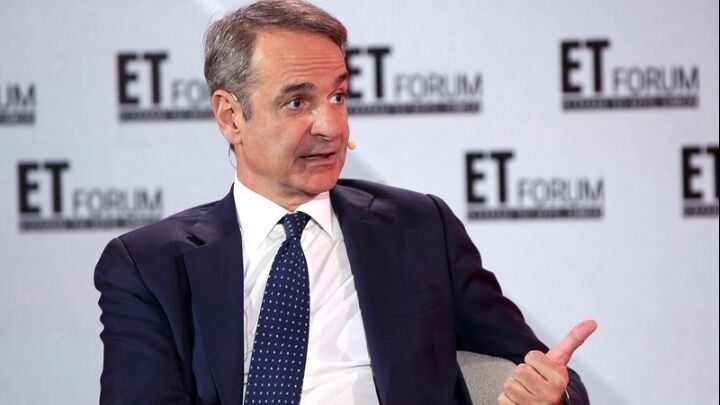
Prime Minister Kyriakos Mitsotakis on Tuesday highlighted the year 2030 as a key milestone for Greece, as it will mark 200 years since the founding of the modern Greek state, saying the anniversary should serve as an opportunity to set specific national goals and outline the country’s course for the years ahead. He also stressed the government’s commitment to supporting households struggling with the rising cost of living, saying that this remains a top priority.
“2030 is not an arbitrary milestone, as it marks 200 years since the founding of the modern Greek state. We need to set very specific goals and explain how we, at least as a political party and as a government, envision the country’s path from now until that year,” Mitsotakis said.
The prime minister was speaking in a discussion with editor-in-chief of the Eleftheros Typos newspaper, at the conference “Looking Ahead to Greece in 2030”, organised by the newspaper at the Grande Bretagne Hotel in Athens.
“What are citizens telling us? That absolute priority is given to issues relating to the economy,” he said, referring to the findings of a survey presented at the start of the conference.
He noted that this was understandable given the significant pressure on disposable income from the global cost-of-living crisis, driven by the surge in energy prices.
“Supporting disposable income and household finances clearly comes first,” he said, describing the challenge as ensuring that strong macroeconomic performance ultimately translates into an improved day-to-day financial reality for every Greek household.
“This policy is linked to a number of specific government priorities: how we create jobs, reduce unemployment, increase wages, cut taxes and address the way the market itself operates,” he added.
“It is not common for a government to be able to say that it has achieved the targets it set,” the prime minister added, referring to the targets set in 2023 for the average and minimum wages.
“However, I recognise that a large part of the increases in nominal wages has been absorbed by the wave of price rises over the past five years,” he noted.
Therefore, he referred to measures to be taken: “First we need an ambitious macroeconomic target: growth that is at least twice the European average, and above 2%. This growth must be driven primarily by investment and go hand in hand with the continued transformation of the country’s production model towards a much more outward-looking economy.
“This growth will allow us to achieve two things: to reach an average monthly salary of € 1,800 by 2030, a minimum wage of certainly more than € 1,000 by 2028, and pensions that will once again increase, taking into account both inflation and the productivity of the economy. In other words, the faster the economy grows, the more citizens’ disposable income will increase, while also giving us greater scope to support the welfare state,” the prime minister said.
amna.gr







Σχόλια Facebook