


The Greek plan ignored: Gallipoli’s warning for Hormuz
The unfolding crisis around Iran and the Strait of Hormuz highlights a familiar lesson from history: limited strategic moves can rapidly escalate into prolonged and costly conflicts.
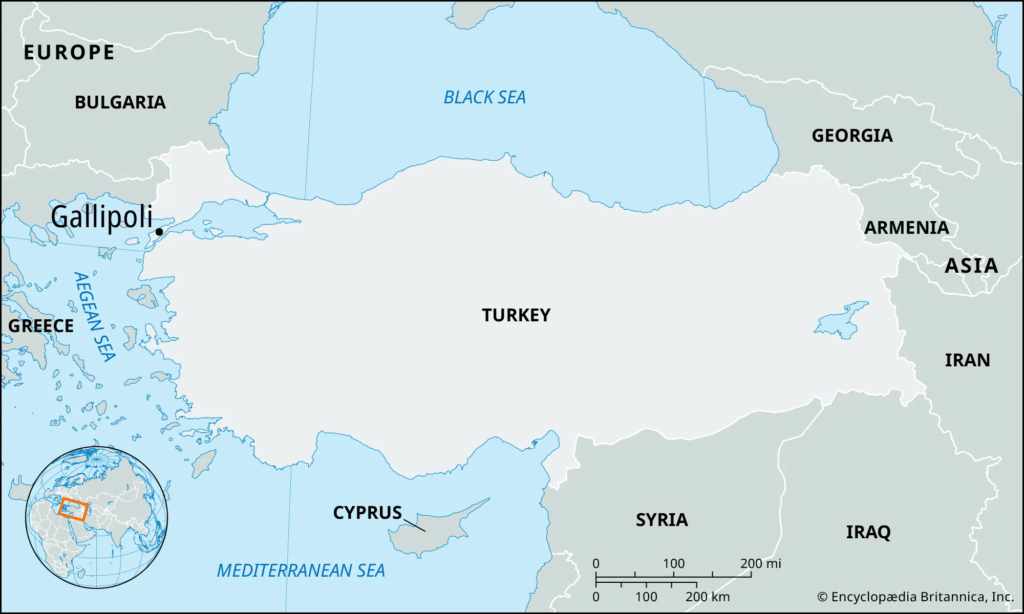
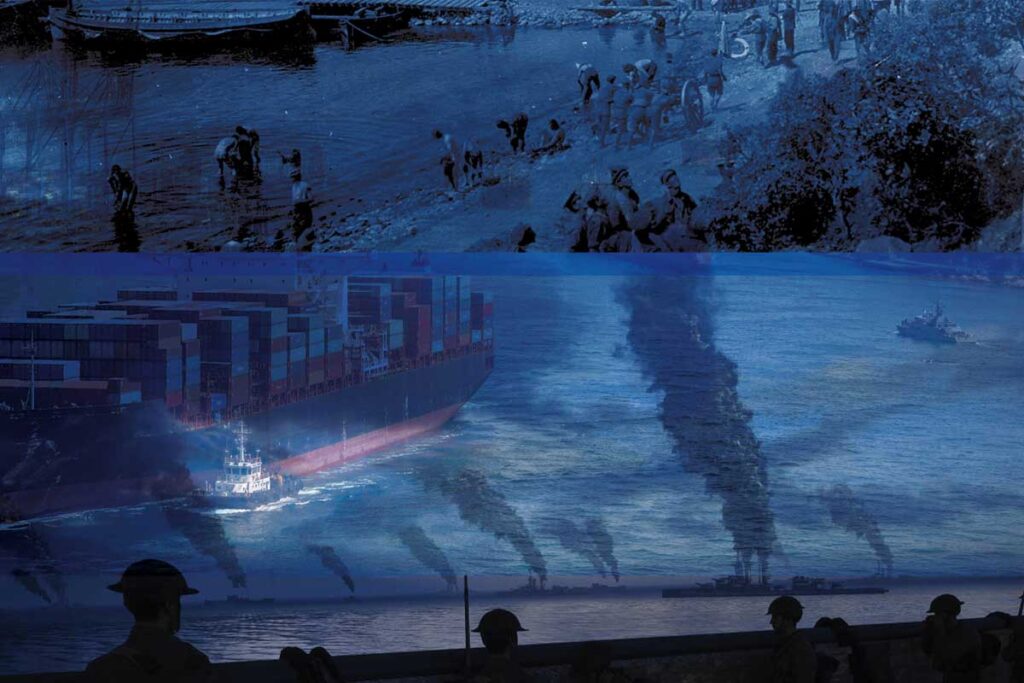
The United States’ decision to control access to Iranian ports through the Strait of Hormuz echoes earlier attempts to dominate critical maritime chokepoints—most notably the Allied campaign at Gallipoli during the First World War.
At the centre of both situations lies the same objective: control of a vital sea corridor. In 1915, Britain and its allies sought to force open the Dardanelles to secure a supply route to Russia. Today, the Strait of Hormuz remains one of the world’s most important energy arteries, with global consequences tied to its stability.
A campaign built on flawed assumptions
The Gallipoli operation began with confidence that naval power alone could achieve a breakthrough. British leadership, driven in part by Winston Churchill, believed that older warships could neutralise Ottoman defences and open the passage without major land involvement.
This assumption proved catastrophic.
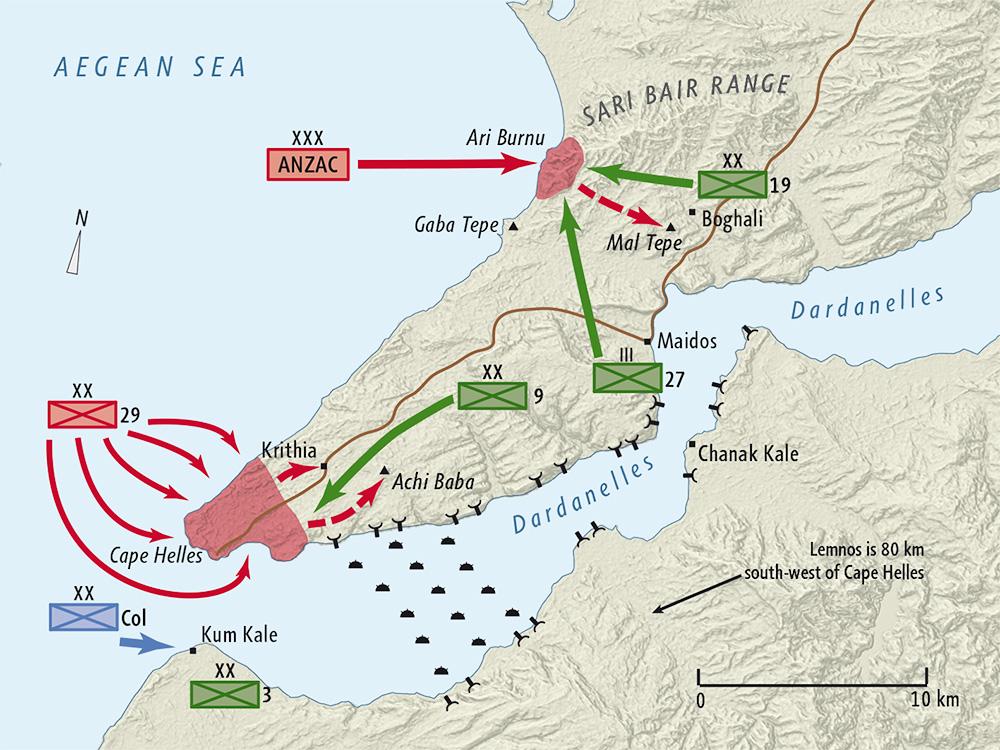
Confined waters exposed Allied ships to concentrated coastal artillery and hidden minefields. Ottoman forces, having fortified both shores of the straits, inflicted severe damage on the advancing fleet. Mines alone sank a significant portion of the Allied naval force, forcing a rapid reassessment.
Rather than withdraw, theAllies escalated
What followed was the infamous land campaign launched on 25 April 1915, drawing in ANZAC and other Allied troops into months of brutal trench warfare. Despite numerical strength, Allied forces faced entrenched defenders on advantageous terrain. The result was devastating: nearly half a million casualties and eventual withdrawal.
The path not taken: Greece and the western approach
Less often discussed is an alternative that may have reshaped the campaign entirely.
At the time, Greece—strategically positioned and militarily capable—had signalled a willingness to support Allied operations. Among the ideas considered was a western-oriented strategy to secure the Hellespont and apply pressure on the Ottoman position from a different axis.
Had the Allies accepted Greek involvement and pursued a coordinated approach from the western side, the campaign might have avoided the most heavily fortified zones of the Dardanelles. A combined naval and regional operation, supported by Greek geography and logistics, could have offered greater flexibility, shorter supply lines and reduced exposure to entrenched coastal defences.
Such a move may not have guaranteed success—but it would likely have altered the balance of risk. Instead of a frontal assault into a narrow, heavily defended chokepoint, the Allies might have created multiple pressure points, complicating Ottoman defensive strategy and potentially avoiding the stalemate that followed.
Strategic hesitation, political divisions and competing priorities ultimately prevented this option from being realised.
Lessons for today’s conflict
The parallels with the current situation in the Strait of Hormuz are striking.
First, chokepoints favour the defender. Just as Ottoman artillery and mines neutralised Allied naval superiority in 1915, modern systems—missiles, drones and asymmetric tactics—allow even weaker states to challenge powerful navies.
Second, underestimating an opponent remains a critical error. Allied planners misjudged Ottoman preparedness; today, similar risks exist in assessing Iran’s capabilities and resolve.
Third, escalation is rarely controlled. What begins as a limited operation can quickly evolve into a broader conflict—the classic pattern of “mission creep”.
Finally, the human and economic costs are often far greater than anticipated. Gallipoli’s casualties were immense; modern conflicts carry not only military risks but also global economic consequences, particularly when energy supply routes are involved.
A different position for Australia
Unlike in 1915, Australia today is not bound to automatically follow allied military decisions. As a sovereign nation, it has the capacity to assess risks independently and determine its own course.
That distinction may prove critical.
Closing line: Gallipoli was not only a failure of execution—but a failure to choose the right strategy. The same question now hangs over Hormuz.
Source: https://tanea.com.au
Link: https://tanea.com.au/en/the-greek-plan-ignored-gallipolis-warning-for-hormuz/







Σχόλια Facebook