


Green Card Changes Coming in November and What Greek Applicants Need to Know
November brings a series of changes for people seeking permanent residence in the United States. Fees for the EB-5 immigrant investor program roughly double on November 30, a grace period for Form I-485 applications mailed to old U.S. Citizenship and Immigration Services (USCIS) addresses ends on November 9, and the State Department’s new Visa Bulletin sets who may file this month.
For applicants from Greece, and for Greek American families sponsoring relatives, those dates matter.
Newsweek highlighted the changes in a report on new fees and application changes coming in November.
The biggest comes from a Department of Homeland Security (DHS) final rule published in the Federal Register on September 30 that takes effect on November 30, 2026. Any EB-5 application, petition or request postmarked on or after that date must include the new fees. Filings postmarked earlier remain subject to the current fee schedule.
EB-5 is the investment route to a green card. By law, an investor must put at least $1,050,000, or $800,000 in a targeted employment area or an infrastructure project, into a U.S. business that creates at least 10 full-time jobs. The program makes about 10,000 visas available each year to investors and their family members.
The fee for Form I-526, filed by a standalone investor, rises from $3,675 to $7,615, an amount that includes a new $75 technology fee. For Form I-526E, filed by investors who go through an approved regional center, the initial petition will cost $7,850, up from $3,675, and an amendment $7,775. The separate EB-5 Integrity Fund fee that regional center investors pay with the I-526E increases from $1,000 to $1,100.
Form I-829, which investors file after two years of conditional residence to remove the conditions and receive a permanent green card, goes from $3,750 to $5,000. The rule also creates a new Form I-527, with a $10,330 fee, for certain investors who filed before the 2022 reform law and need to amend their petitions after their regional center was terminated or the business they invested in was debarred from the program.
Regional centers themselves face steeper increases. An initial application for regional center designation, Form I-956, will cost $44,115, up from $17,795, and Form I-956F, the application for approval of an investment in a commercial enterprise, $42,675. An I-956 amendment, by contrast, drops to $9,835, and the I-956G annual statement falls from $3,035 to $2,165. Annual integrity fees for regional centers rise to $22,000 for centers with more than 20 investors and to $11,000 for smaller ones.
DHS estimates that the rule affects about 16,600 EB-5 filings a year and raises fees by a weighted average of 70.7 percent, or roughly $2,946 per filing. USCIS says it is funded mainly by filing fees rather than taxpayer dollars, and that the EB-5 Reform and Integrity Act of 2022 required fees that recover the full cost of the program, including audits, site visits and anti-fraud work. Current EB-5 fees are low because, after a federal court ruling in Colorado in November 2025, the agency went back to the amounts in effect until March 2024.
The second change involves Form I-485, the application to adjust status that people already in the United States file to become permanent residents. On October 7, USCIS changed the mailing addresses for the form, which now depend on the basis of the application. The agency is giving a 30-day grace period and will accept forms sent to any prior filing location only if they are postmarked on or before November 9, 2026. The correct addresses are listed on the USCIS page “Direct Filing Addresses for Form I-485.” Some applicants can also file the I-485 online through a USCIS account.
Since September 18, USCIS accepts only the 09/18/26 edition of Form I-485. The form was revised to align with the new public charge final rule, which governs whether an applicant is likely to depend on government assistance, and there is no grace period. The 01/20/25 and 09/04/26 editions are rejected. The edition date appears at the bottom of every page, and all pages must come from the same edition. Applicants who mail the I-485 must include the Form I-693 medical exam in the original envelope sealed by the civil surgeon.
The third piece is the November Visa Bulletin, published monthly by the State Department. Applicants born in Greece fall under the “All Chargeability Areas” column, which covers every country except mainland China, India, Mexico and the Philippines. For November, USCIS said applicants inside the United States must use the “Dates for Filing” chart for both family-sponsored and employment-based categories. That means an applicant can file the I-485 if their priority date is earlier than the date listed for their category.
In the family categories, November filing dates are February 1, 2021, for adult unmarried sons and daughters of U.S. citizens (F1), September 1, 2020, for adult unmarried sons and daughters of permanent residents (F2B), November 1, 2015, for married sons and daughters of citizens (F3), and November 1, 2012, for brothers and sisters of adult citizens (F4). F2A, for spouses and minor children of permanent residents, is current. Final approval still follows the stricter “Final Action Dates” chart, with cutoffs of January 22, 2021, for F1, October 22, 2026, for F2A, August 22, 2020, for F2B, October 22, 2015, for F3 and October 22, 2012, for F4. Spouses, parents and unmarried children under 21 of U.S. citizens are not subject to these waits.
Among employment categories, EB-1, for people of extraordinary ability, outstanding professors and researchers and certain multinational executives, remains current. EB-2, for advanced-degree professionals and people of exceptional ability, has a filing date of March 15, 2026, and a final action date of April 1, 2025. For EB-3 skilled workers and professionals, the dates are August 1, 2024, and June 15, 2024. EB-5 stays current for the column that includes Greece. Applicants processing abroad through a consulate submit their documents to the National Visa Center once their priority date is earlier than the filing date and they receive instructions to do so.
The 2027 Diversity Visa lottery remains on hold. A federal judge in California had ordered the State Department to open registration by November 1, but on October 29 the U.S. Court of Appeals for the Ninth Circuit paused that order while the government’s appeal proceeds, Bloomberg Law reported. No official date has been set, and the DV-2027 instructions, which list the eligible countries, have not been published. The only official entry site is dvprogram.state.gov.
Visa Bulletin dates change every month, and USCIS announces each month which chart it will accept. Before mailing anything, applicants should check the form page on uscis.gov and the current bulletin on travel.state.gov, and consult an immigration attorney where needed. A wrong form edition or a wrong address leads to rejection, and a rejected application does not keep its filing date.
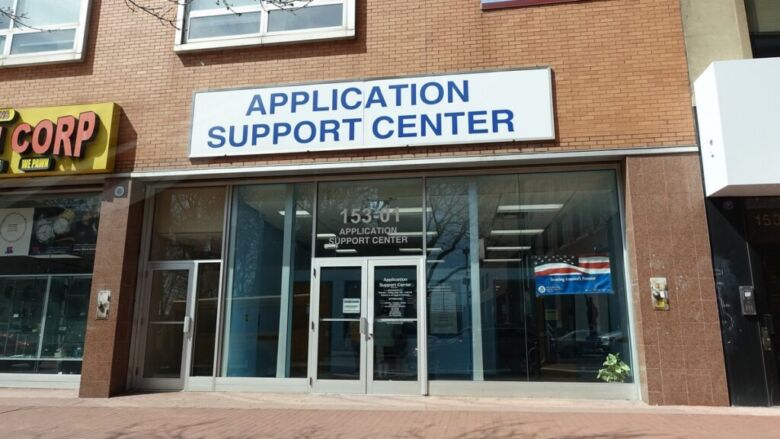
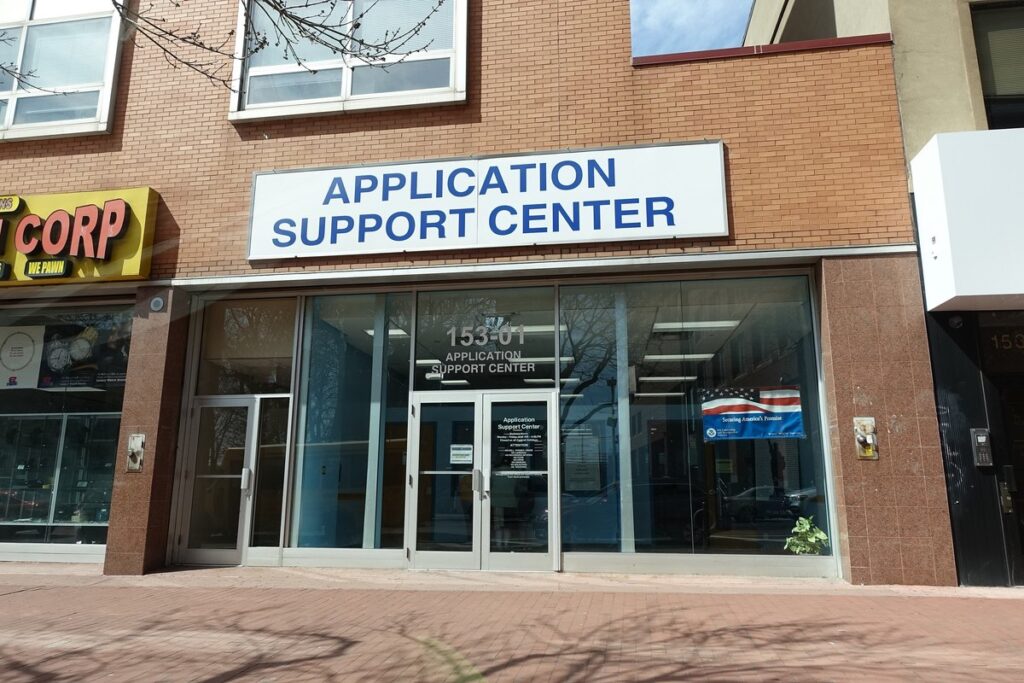 The USCIS Application Support Center on Jamaica Avenue in Queens, where applicants in New York give fingerprints and photos. Photo Tdorante10 / Wikimedia Commons
Evageline Plakas
SOURCE: https://www.hellenicdailynewsny.com/en-us/diaspora/green-card-changes-november-2026-greek-applicants-eb5-fees-i485








Σχόλια Facebook