


IMF: Greece’s tax reforms offer valuable lessons for other countries
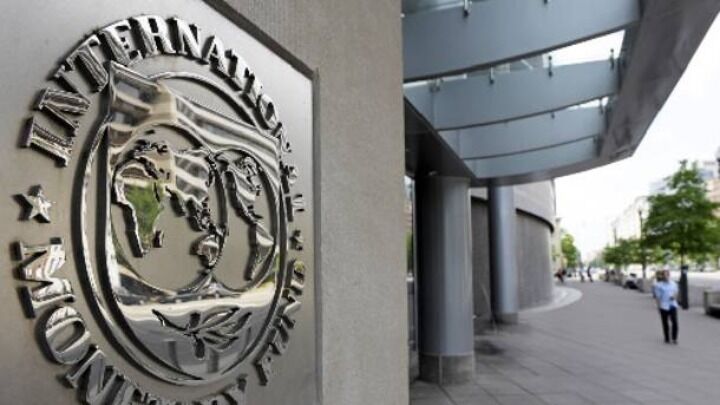
Though in some ways unique, Greece’s experience offers a profoundly valuable and widely-applicable lesson, according to an IMF report entitled “How Tax Administration Supported Greece’s Economic Recovery.”
“Sustained effort-grounded in good governance, careful sequencing, and investment in people-can turn crisis response into lasting institutional strength,” the report underlined and added:
“Today, it is one of only five European Union countries running a primary budget surplus. This is a striking reversal that underscores how far its public finances have come. The shift reflects, in no small part, a transformed tax administration that has steadily closed compliance gaps and rebuilt fiscal credibility-one of the quiet engines behind Greece’s broader economic recovery.
This is a striking reversal that underscores how far its public finances have come. The shift reflects, in no small part, a transformed tax administration that has steadily closed compliance gaps and rebuilt fiscal credibility-one of the quiet engines behind Greece’s broader economic recovery.
The IMF’s latest annual health check of the Greek economy (the Article IV consultation) finds that the country is well positioned to cope with external shocks, including those stemming from the war in the Middle East. This reflects strengthened fiscal sustainability and financial stability. The primary surplus rose to nearly 5 percent of GDP in 2024-25, while the public debt-to-GDP ratio has fallen by about 65 percentage points from its 2020 peak. Financing conditions improved in parallel, with sovereign spreads returning to levels last seen before the 2008 global financial crisis.
The reform agenda is not finished. But the scale-and sequencing-of Greece’s turnaround offers valuable lessons for other countries pursuing tax reform. New IMF work in this area highlights two core insights. First, governments cannot deliver on their fiscal reform goals unless taxation is fair, credible, and transparent. Second, building these capabilities can take time. In Greece, reform unfolded in three mutually reinforcing phases-stabilization (2010-12), institution building (2013-17), and digital transformation (2018-25)-supported throughout by IMF capacity development.”
2018-2025: Digital transformation
“While digital tools had been introduced earlier, the decisive push came after the institutional foundations were firmly in place. By this stage, the tax administration had the governance, skills, and credibility required to make digitalization stick. Between 2020 and 2025, in part in response to the pandemic, Greece rolled out an integrated suite of digital systems-from back‑office analytics to real‑time electronic invoicing and point‑of‑sale connectivity.
These reforms made compliance easier for taxpayers and provided auditors with sharper tools to identify risks and target enforcement where it mattered most.
The results were clear. VAT compliance improved significantly, with VAT revenues increasing by 2.4 percentage points of GDP over 15 years, from 7.1 percent in 2010 to about 9.5 percent in 2025.”
A virtuous cycle-and lessons beyond Greece
“Taken together, Greece’s reforms created a virtuous cycle: better governance enabled digitalization; digitalization improved compliance; higher and more reliable revenues reinforced public trust and fiscal credibility. By 2025, Greece’s tax-to-GDP ratio had climbed to 28 percent in 2025, up from 20.5 percent in 2009. While revenue growth also reflects broader economic and policy changes, improvements in tax administration played a central role by broadening the tax base, strengthening enforcement, and increasing trust in the system.
The journey continues. The next challenge is to make the recent gains durable-by embedding new ways of working deeply into day‑to‑day processes. Priorities include using analytics and artificial intelligence more systematically to manage compliance risks, further improving taxpayer services and trust, and ensuring that skills and staffing keep pace with rapid technological change.
Though in some ways unique, Greece’s experience offers a profoundly valuable and widely-applicable lesson. Sustained effort-grounded in good governance, careful sequencing, and investment in people-can turn crisis response into lasting institutional strength.”
amna.gr







Σχόλια Facebook