


19 May: Greece marked Pontian Greek Genocide Remembrance Day
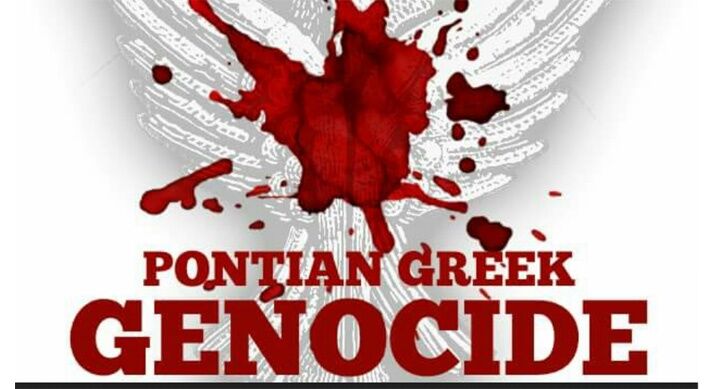
Greece on 19 May commemorates the Genocide of the Pontian Greeks, honoring the memory of the hundreds of thousands of Greeks of Pontus who suffered persecution, massacres, and forced displacement during the final years of the Ottoman Empire between 1916 and 1923.
The Genocide of the Greeks of Pontus refers to the violent, mass, and deadly events that took place during the second decade and the beginning of the third decade of the 20th century in the then-collapsing Ottoman Empire. These events were triggered by the gradual rise and increasing influence of Turkish nationalism.
The result was the physical extermination, destruction, displacement, and uprooting of hundreds of thousands of Pontian Greeks from their ancestral homelands. The number of victims has been estimated at 353,000.
The rise to power of the Young Turks in Ottoman Thessaloniki in 1908 is considered the starting point of the “systematic” and “organised” persecutions, as described by contemporary historians and researchers, including death marches, confinement in forced labor battalions, looting, and acts of violence against all Christian populations of the East.
The commemoration was officially established by Law 2193/1994, while Presidential Decree 99/1994 defined the content of the annual events dedicated to preserving the historical memory of the tragedy that transformed the Pontian Greeks into a people of refugees and diaspora.
The Pontic Greek Genocide referenced for the first time in an official communiqué of the WCC
For the first time in the history of the World Council of Churches (WCC), the Pontic Greek Genocide at the hands of the Turks was explicitly referenced in the official joint communiqué, alongside the illegal occupation of Cyprus.
This marked the close of the Conference of the Churches’ Commission on International Affairs (CCIA) of the WCC, which took place in Athens from May 18 to 20 and was hosted by the Church of Greece.
The conference participants unanimously accepted the inclusion of a reference to the Pontic Genocide for the first time, following a proposal by the Church of Greece.
The communiqué also included references to commemorative events in Athens marking the tragic anniversary of “the genocides of 1915 of the Greeks, Syriacs, and Armenians,” serving as a grim reminder of humanity’s persistent cruelty, violence, and greed. Christians are continually called to renew their commitment to peace, justice, and the integrity of creation.
Notably, the World Council of Churches sharply criticised the United Nations and its role in global conflicts.
The communiqué states, “The utter inadequacy and ineffectiveness of the UN Security Council in preventing or resolving conflicts, whether in Gaza, Ukraine, or Sudan, has raised serious doubts about the usefulness of this body and whether the ‘international community,’ to which we often appeal, truly exists.”
“We mourn this failure and urgently call for a radical reform of the international peace and security architecture so that it may better fulfill its purpose of saving humanity from the scourge of war.”
At the same time, the Council praised the work of churches around the world in building peace, resolving conflicts, promoting human rights, and fostering social cohesion at the local level.
The conference focused on the ongoing situation in Gaza. It described the violence inflicted by the Israeli military as blatantly violating international law and morality. This violence is further compounded by attacks on southern Lebanon and threats of ethnic cleansing against Gaza’s Palestinian population.
Additionally, the WCC condemned the ongoing illegal Russian invasion of Ukraine, the uncontrolled civil war in Sudan, the military dictatorship in Myanmar, the occupation of Cyprus, the evacuation of Nagorno-Karabakh’s indigenous Armenian population, and the growing militarization in various regions.
Greek Government: “Preserving Memory is our duty”
Government Spokesperson Pavlos Marinakis issued a message marking the day, describing the Genocide of the Pontian Greeks as “one of the most tragic chapters in the history of Hellenism.”
“It is a crime engraved indelibly in the collective memory of Greeks everywhere, but especially in the souls of those who carry this heritage and the memory of their ancestors,” he stated.
Marinakis also referred personally to his Pontian roots, noting: “I, too, am part of this legacy of memory, as my grandmother was from Pontus. The stories, the memories, and the strength of these people are not only a family heritage, but part of our historical consciousness.”
He stressed that “the highlighting of historical truth, the moral vindication of the victims, and the preservation of memory constitute a duty for all of us,” emphasising that remembrance serves as a warning so that humanity never again permits policies leading to persecution, uprooting, and the extermination of civilian populations.
“The Flame of Memory” lit in Thessaloniki
Meanwhile, commemorative events were also held in Thessaloniki, where “The Flame of Memory” was lit on Sunday evening at Hagia Sophia Square near the Monument to the Genocide of the Pontian Greeks.
The ceremony, organised by the Municipality of Thessaloniki, took place in an atmosphere of deep emotion accompanied by the sounds of traditional Pontian musical instruments, marking 107 years since the massacres and uprooting of the Pontian Greeks.
Mayor Stelios Angeloudis stated that “it is very difficult to speak about the tragic events that indelibly marked the fate of Pontian Hellenism without one’s soul bleeding.”





Σχόλια Facebook